


- Room 202, Building 7, No. 125, Yongjun Road, Dalingshan Town, Dongguan City.
Position:
/
Rapid Prototyping Guide: How to Choose CNC, 3D Printing, Injection Molding & Sheet Metal for Custom Parts
2026-09-24 16:05:03
Choosing the right manufacturing process is one of the most important decisions when developing a new product. The best process depends on more than just part geometry. Material, production volume, dimensional requirements, surface finish, mechanical performance, tooling cost, lead time, and the stage of product development all need to be considered.
For most custom parts and prototypes, the main manufacturing options include CNC machining, 3D printing, injection molding, and sheet metal fabrication. Each process has different strengths.
Quick answer: For highly accurate functional prototypes, CNC machining is often a strong choice. For fast prototypes with complex geometries and very low quantities, 3D printing is often more practical. For larger quantities of plastic parts, injection molding becomes more economical after tooling is considered. For metal enclosures, brackets, panels, and formed components, sheet metal fabrication is often the appropriate process.
The right choice ultimately depends on the part's material, geometry, quantity, tolerance, performance requirements, and budget.
What Is Rapid Prototyping?
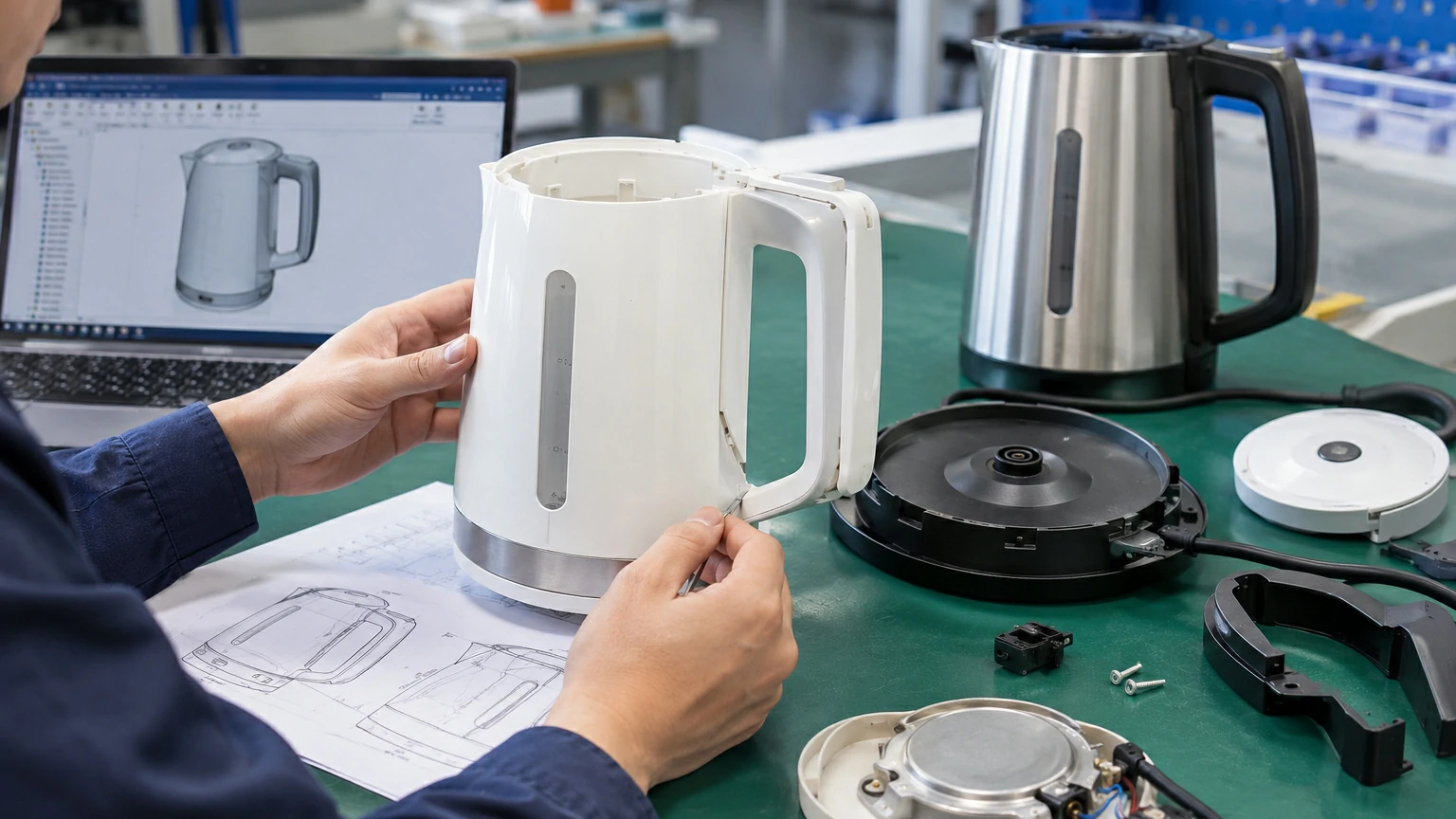
Rapid prototyping is the process of quickly manufacturing physical parts from digital designs so engineers and product teams can test, evaluate, and improve a product before full-scale production.
Unlike traditional product development approaches, rapid prototyping allows companies to move through multiple design iterations without waiting for expensive production tooling.
Common rapid prototyping technologies include:
The appropriate technology depends on what the prototype needs to prove.
A visual prototype may only need to reproduce the appearance of a product. A functional prototype may need to withstand mechanical loads, heat, chemicals, or repeated assembly.
This distinction is important because the cheapest or fastest manufacturing process is not necessarily the best process for every prototype.
Which Manufacturing Process Is Best for Your Part?
| Manufacturing Process | Best For | Tolerances | Lead Time | Ideal Quantity |
| CNC Machining | Functional tests, tight tolerances, metal/plastic | ±0.02mm | 3–7 Days | 1–500 pcs |
| 3D Printing (SLA/SLS/SLM) | Complex geometries, rapid visual models | ±0.1mm | 1–3 Days | 1–20 pcs |
| Rapid Injection Molding | High-volume production validation, end-use plastic | ±0.01mm | 10–20 Days | 100–10,000+ pcs |
| Sheet Metal Fabrication | Enclosures, brackets, structural housings | ±0.1mm | 3–7 Days | 1–1,000 pcs |
| Die Casting | Durable metal housings, mass production | ±0.5mm | 15–30 Days | 500–10,000+ pcs |
There is no single manufacturing process that is best for every project.
Instead, match the manufacturing technology to the primary objective of your prototype.
Choose CNC machining when precision, strength, engineering materials, and functional performance are priorities.
Choose 3D printing when speed, design flexibility, complex geometry, and very low quantities are priorities.
Choose injection molding when you need repeatable plastic parts at higher quantities and can justify tooling.
Choose sheet metal fabrication when the part is primarily a cut, bent, or formed metal component.
For many product development projects, the best answer is not one process but a combination of processes used at different stages.
Can One Manufacturing Company Provide Multiple Processes?
Yes. Working with a supplier that provides multiple manufacturing technologies can simplify the product development process.
For example, a project may require:
- 3D printing for early prototypes
- CNC machining for functional metal prototypes
- Injection molding for plastic production
- Sheet metal fabrication for metal enclosures
A multi-process manufacturing partner can coordinate these requirements under one supplier relationship.
For international customers, this can also simplify communication, quality management, quoting, and logistics.
CNC Machining for Rapid Prototyping
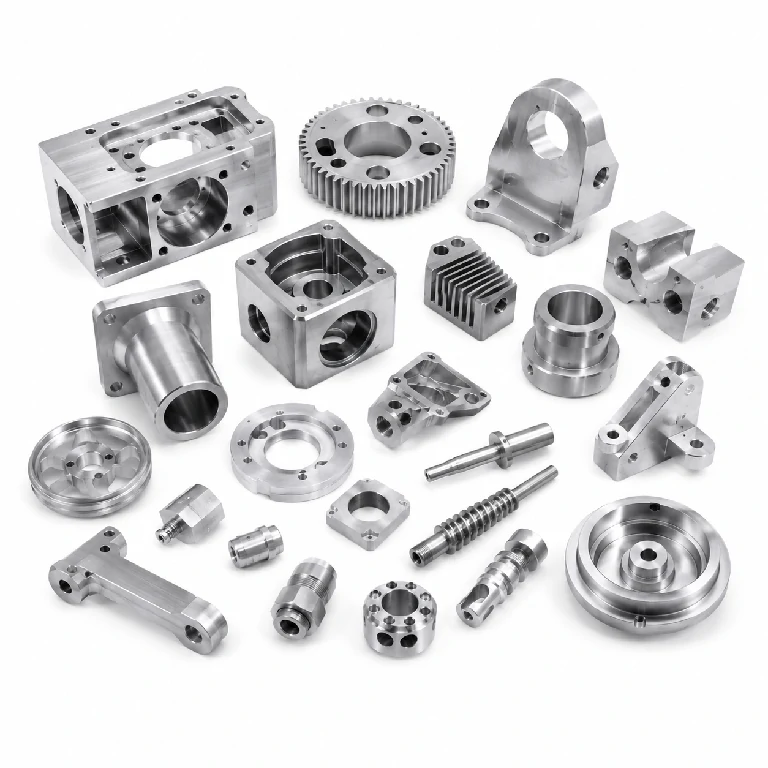
CNC machining is a subtractive manufacturing process that removes material from a solid block using computer-controlled cutting tools.
It is one of the most versatile choices for functional prototypes because parts can be manufactured from many of the same engineering materials used in final products.
Common CNC materials include:
- Aluminum
- Stainless steel
- Titanium
- Brass
- Copper
- POM
- Nylon
- ABS and other engineering plastics
When Should You Choose CNC Machining?
CNC machining is particularly suitable when your part requires:
- Tight dimensional tolerances
- High mechanical strength
- Production-grade materials
- Excellent surface finishes
- Functional testing
- Threaded holes
- Precision mating surfaces
CNC machining can also support both prototyping and low-volume production, making it possible to use the same manufacturing technology across multiple stages of product development.
3-Axis, 4-Axis and 5-Axis CNC Machining
The required number of CNC axes depends on part geometry.
3-axis CNC machining is suitable for many standard components and relatively straightforward geometries.
4-axis CNC machining adds rotary movement, allowing additional surfaces to be machined without completely repositioning the part.
5-axis CNC machining provides additional rotary movement and is particularly useful for complex surfaces, angled features, deep cavities, and intricate geometries.
For highly complex parts, 5-axis machining can reduce the number of setups and improve access to difficult-to-machine surfaces.
CNC Milling vs CNC Turning
CNC milling and CNC turning are designed for different part geometries.
CNC milling is commonly used for blocks, housings, brackets, plates, pockets, slots, and complex three-dimensional components.
CNC turning is better suited to cylindrical parts such as shafts, pins, bushings, connectors, and threaded components.
Some projects require both milling and turning operations.
For small, long, or highly precise cylindrical components, Swiss machining can provide additional manufacturing capability.
3D Printing for Rapid Prototyping
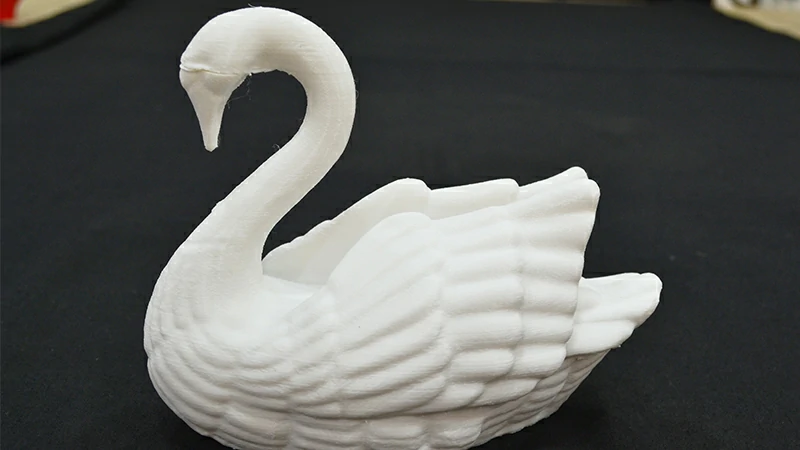
3D printing is an additive manufacturing process that builds parts layer by layer from a digital model.
Because it does not require conventional tooling, 3D printing is particularly useful during the early stages of product development.
When Should You Choose 3D Printing?
3D printing is often appropriate when:
- You need a prototype quickly
- The quantity is very small
- The design is still changing
- Tooling investment is not justified
- The geometry is highly complex
- You need to test the overall shape or assembly
3D printing is particularly useful for producing concept models and early functional prototypes.
Advantages of 3D Printing
The main advantages include:
- No injection mold required
- Fast design iterations
- Low initial setup cost
- Complex geometry capability
- Economical for very small quantities
However, different 3D printing technologies have different material properties, dimensional accuracy, surface finishes, and production capabilities.
For example, SLA is often selected when detailed features and surface quality are important, while SLS can be useful for functional polymer components without conventional support structures.
Injection Molding for Plastic Prototypes and Production
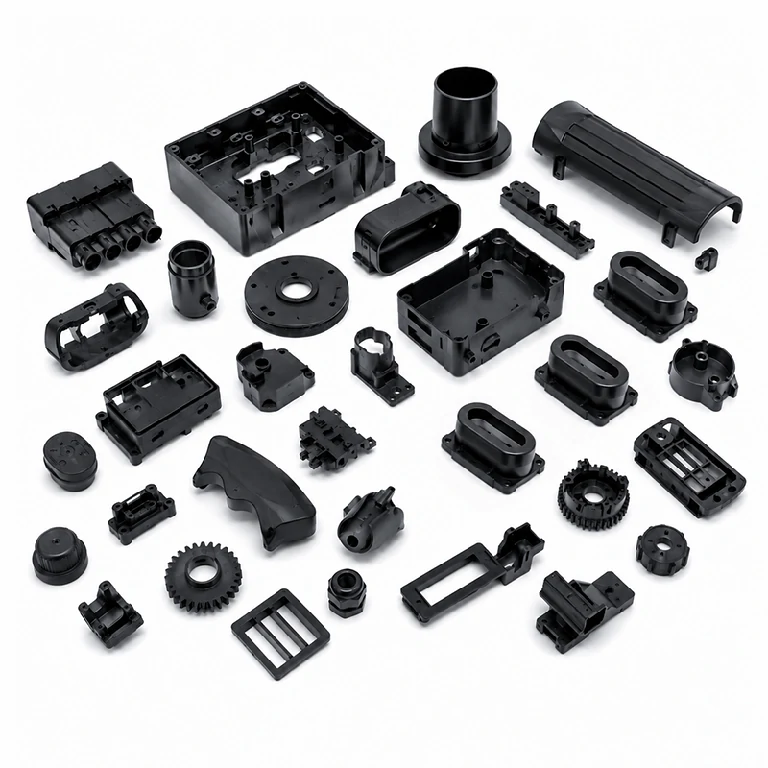
Injection molding is different from CNC machining and 3D printing because it requires a mold.
Plastic material is melted and injected into the mold cavity under pressure. After cooling, the finished part is ejected.
The main advantage of injection molding is repeatable, scalable production.
When Should You Choose Injection Molding?
Injection molding is usually appropriate when:
- The part is made from plastic
- Production quantities are relatively high
- Consistent part-to-part quality is required
- Surface appearance is important
- Low per-part cost is a priority
- Production tooling can be justified
Injection molding is generally less attractive for a single prototype because tooling creates an upfront cost.
However, rapid tooling and low-volume injection molding can make the process practical for product validation and bridge production.
Injection Molding vs 3D Printing
For a small number of plastic prototypes, 3D printing can avoid tooling costs and allow rapid design changes.
For larger quantities of identical plastic parts, injection molding can become more efficient because the mold can produce repeated parts with short cycle times.
A common product development workflow is:
3D Printing → Functional Testing → Design Optimization → Rapid Tooling → Injection Molding → Mass Production
This allows companies to use the right process at each stage rather than forcing one technology to handle the entire product development cycle.
Sheet Metal Fabrication for Metal Parts
Sheet metal fabrication is another important manufacturing option for prototypes and low-volume production.
It is commonly used for components made from sheet materials such as aluminum, stainless steel, and mild steel.
Typical sheet metal processes include:
- Laser cutting
- CNC punching
- Bending
- Welding
- Forming
- Finishing
Sheet metal fabrication is often a good choice for:
- Electrical enclosures
- Control panels
- Brackets
- Cabinets
- Chassis
- Covers
- Industrial equipment components
If your part is primarily a flat or formed metal component, sheet metal fabrication may be more appropriate than machining the entire part from a solid block.
How Does Part Geometry Affect Process Selection?
Part geometry is one of the most important factors in manufacturing process selection.
A simple bracket may be efficiently produced through CNC machining or sheet metal fabrication.
A complex internal lattice structure may be better suited to 3D printing.
A plastic housing with millions of identical units may be better suited to injection molding.
Before selecting a process, engineers should consider:
- Overall dimensions
- Wall thickness
- Internal cavities
- Undercuts
- Holes
- Threads
- Ribs
- Curved surfaces
- Draft angles
- Accessible machining surfaces
Manufacturing constraints should be considered during the design stage rather than after the part has already been finalized.
How Does Production Volume Affect the Best Manufacturing Process?
Production quantity has a major impact on manufacturing economics.
1–10 Parts
For very small quantities, 3D printing and CNC machining are often practical because there is little or no tooling investment.
10–100 Parts
CNC machining, 3D printing, and low-volume injection molding may all be appropriate depending on material and part requirements.
100–1,000 Parts
The optimal process depends heavily on geometry, material, and part cost. CNC machining and low-volume injection molding can both be considered.
1,000+ Parts
For many plastic parts, injection molding becomes increasingly attractive because tooling costs can be distributed across a larger number of components.
These ranges are guidelines rather than fixed rules. A complex part with expensive machining time may justify tooling at a much lower quantity, while a simple part may remain economical to machine at higher quantities.
How Do Tolerances Affect Manufacturing Process Selection?
Tolerance describes the acceptable variation in a part's dimensions.
If your component contains precision mating surfaces, bearings, shafts, threads, or mechanical interfaces, tolerance requirements become especially important.
CNC machining is often selected for applications requiring tight dimensional control.
3D printing can achieve useful accuracy, but the result depends heavily on the technology, material, part size, orientation, and post-processing.
Injection molding can provide highly repeatable dimensions once the mold and process have been properly developed, although material shrinkage and mold design must be carefully considered.
The best approach is to identify which dimensions are functionally critical rather than applying extremely tight tolerances to every feature.
How Does Surface Finish Affect Process Selection?
Surface finish requirements can also influence the manufacturing process.
CNC machined parts can receive finishes such as:
- Anodizing
- Brushing
- Polishing
- Sandblasting
- Plating
- Powder coating
3D printed parts may require sanding, polishing, vapor smoothing, coating, or other post-processing depending on the technology.
Injection molded parts can achieve different textures and appearances directly through the mold surface.
For cosmetic products, mold texture and surface design should be considered during the tooling stage.
A Practical Rapid Prototyping Workflow
A typical product development process may look like this:
Step 1: Create the CAD Design
Develop the initial 3D model and engineering drawings.
Step 2: Select the Prototype Manufacturing Process
Evaluate material, geometry, quantity, tolerance, finish, and functional requirements.
Step 3: Build the First Prototype
Use 3D printing, CNC machining, or another appropriate technology to produce the first physical part.
Step 4: Test the Prototype
Check dimensions, fit, assembly, appearance, mechanical performance, and other functional requirements.
Step 5: Optimize the Design
Modify the CAD model based on prototype testing.
Step 6: Select the Production Process
Once the design is validated, determine whether CNC machining, injection molding, sheet metal fabrication, or another process is most appropriate for production.
Step 7: Begin Low-Volume or Mass Production
Move into the appropriate production method based on expected demand and unit economics.
This approach helps reduce the risk of investing in production tooling before the product design has been properly validated.
Why Work With a China Rapid Prototyping Manufacturer?
China has a large manufacturing ecosystem covering CNC machining, 3D printing, injection molding, tooling, sheet metal fabrication, finishing, and assembly.
For global companies, an experienced China rapid prototyping manufacturer can provide access to multiple production technologies through one manufacturing partner.
QY Prototypes provides custom manufacturing services including:
- CNC machining
- 3D printing
- Injection molding
- Custom prototype manufacturing
- Low-volume production
- Custom parts manufacturing
Our goal is to match the manufacturing process to the actual requirements of each part rather than recommending the same process for every project.
FAQs
What is the best manufacturing process for rapid prototyping?
There is no single best process for every prototype. CNC machining is often suitable for precise functional parts, while 3D printing is useful for fast and complex prototypes. Injection molding is more appropriate when plastic parts need to be produced repeatedly at larger quantities.
Is CNC machining better than 3D printing for prototypes?
It depends on the prototype requirements. CNC machining is often preferred when the prototype requires high dimensional accuracy, strong engineering materials, or production-like mechanical performance. 3D printing is often preferable when speed, complex geometry, or very low quantities are more important.
Is injection molding suitable for prototypes?
Yes. Rapid tooling and low-volume injection molding can be used to produce prototype and bridge-production parts. However, traditional production tooling may not be economical for a single prototype.
What is the cheapest rapid prototyping method?
There is no universally cheapest method. For very small quantities and simple prototypes, 3D printing can often have a low initial cost because no tooling is required. CNC machining may be more economical for certain functional parts, while injection molding can provide lower unit costs at larger quantities.
How do I choose between CNC machining and injection molding?
Consider production volume, material, tolerance, geometry, tooling budget, and required surface finish. CNC machining is flexible for prototypes and low-volume parts, while injection molding is generally more suitable when large quantities of identical plastic parts are required.
Can I use 3D printing for production parts?
Yes. 3D printing can be used for low-volume and customized production parts, particularly when tooling is not economical or when complex geometry is required. For larger quantities of standard plastic parts, other manufacturing processes may offer better production economics.
Should I prototype before injection molding?
In many cases, prototyping before production tooling is a useful way to validate fit, function, assembly, and design. 3D printing or CNC machining can be used to test the design before committing to injection mold production.
Final Takeaway
The right rapid prototyping process depends on the part, not simply the technology.
Before requesting a quotation, define your material, geometry, quantity, tolerance, surface finish, functional requirements, and target production volume.
Then compare the available manufacturing processes.
For most projects:
- CNC machining is a strong option for precision and functional prototypes.
- 3D printing is a strong option for fast, flexible, low-volume prototypes.
- Injection molding is a strong option for repeatable plastic production.
- Sheet metal fabrication is a strong option for cut, bent, and formed metal components.
If you are unsure which process is appropriate for your part, a professional manufacturing supplier can review your CAD model and recommend a suitable process based on the actual requirements.
QY Prototypes provides CNC machining, 3D printing, injection molding, and custom manufacturing services in China, helping companies move from prototype development to low-volume and production manufacturing.