


- Room 202, Building 7, No. 125, Yongjun Road, Dalingshan Town, Dongguan City.
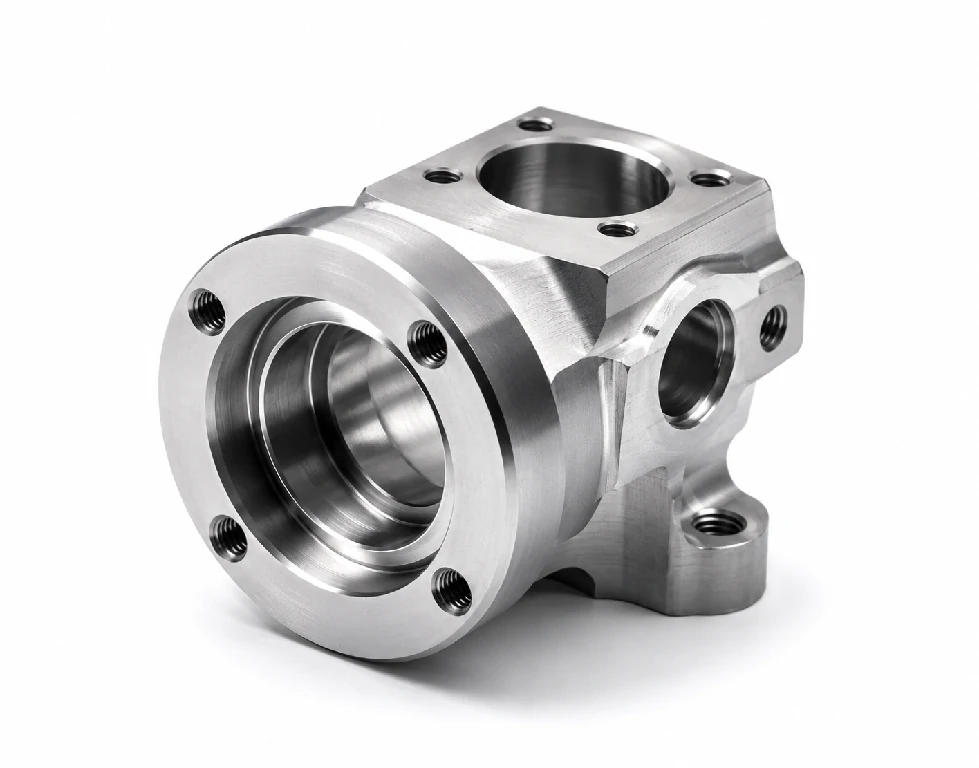
Position:
/
China CNC Machining Services: Custom Precision CNC Parts for Prototypes and Production
2026-09-17 17:10:52
CNC machining is one of the most reliable and versatile manufacturing processes for producing precision metal and plastic parts. From rapid prototypes to low-volume production and end-use components, CNC machining services in China provide an efficient solution for companies looking for high-quality custom parts at competitive costs.
With advanced CNC equipment, experienced engineers, and a well-established manufacturing supply chain, China has become an important manufacturing destination for companies worldwide.
At QY Prototypes, we provide custom CNC machining services for prototypes, functional components, and production parts. Our capabilities include CNC milling, CNC turning, 3-axis, 4-axis and 5-axis machining, as well as EDM and Swiss machining for specialized applications.

What Is CNC Machining?
CNC, or Computer Numerical Control, machining is a subtractive manufacturing process that uses computer-controlled machines to remove material from a solid workpiece.
A CNC machine follows digital CAD/CAM instructions to control the movement of cutting tools and produce parts according to precise dimensional requirements.
Unlike additive manufacturing, such as 3D printing, CNC machining starts with a solid block or bar of material and removes unwanted material until the desired shape is created.
CNC machining can produce parts from a wide range of materials, including:
- Aluminum
- Stainless steel
- Carbon steel
- Titanium
- Brass
- Copper
- POM
- Nylon
- ABS
- Other engineering plastics
This flexibility makes CNC machining suitable for both prototypes and functional production components.
Why Choose CNC Machining for Custom Parts?
CNC machining offers several advantages for product development and manufacturing.
High Precision
Modern CNC machines can produce components with very tight dimensional tolerances. This makes CNC machining suitable for applications where accurate fits, holes, threads, and mating surfaces are critical.
Excellent Repeatability
Once a CNC program has been developed and verified, the same machining process can be repeated to produce consistent parts across a production batch.
Wide Material Selection
CNC machining supports a broad range of metals and plastics, allowing engineers to select materials based on strength, weight, corrosion resistance, temperature resistance, and other requirements.
No Tooling Required
Unlike injection molding, CNC machining does not require an injection mold before production can begin. This makes it particularly attractive for prototypes and low-volume production.
Suitable for Prototypes and Production
CNC machining can be used throughout the product development cycle, from the first functional prototype to small-batch and production parts.
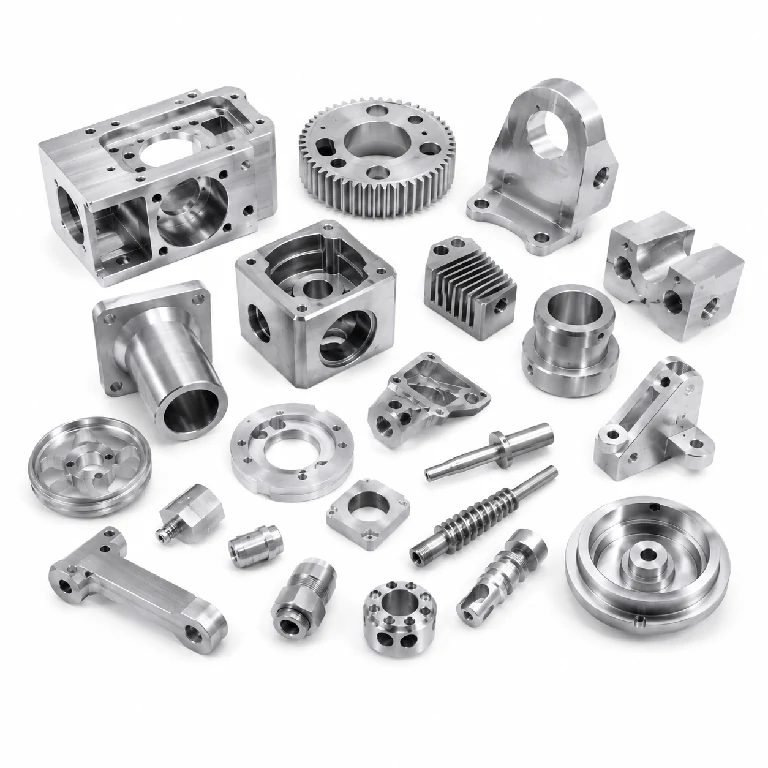
CNC Milling Services
CNC milling is one of the most commonly used CNC machining processes.
During milling, rotating cutting tools remove material from a stationary workpiece. By controlling the movement of the cutting tool along multiple axes, manufacturers can create pockets, slots, holes, contours, flat surfaces, and complex three-dimensional geometries.
CNC milling is widely used for manufacturing:
- Machine components
- Aluminum housings
- Brackets
- Fixtures
- Automotive components
- Robotics parts
- Electronic enclosures
- Engineering prototypes
For complex components, multi-axis CNC milling can reduce the number of setups required and improve overall machining accuracy.
CNC Turning Services
CNC turning is particularly suitable for cylindrical and rotational components.
During CNC turning, the workpiece rotates while a cutting tool removes material from its surface. This process can produce precise external diameters, internal bores, grooves, threads, and other rotational features.
Typical CNC turned parts include:
- Shafts
- Pins
- Bushings
- Connectors
- Screws
- Spacers
- Cylindrical housings
For projects requiring both milling and turning operations, manufacturers can combine different CNC processes or use advanced mill-turn equipment to reduce handling and improve efficiency.
3-Axis, 4-Axis and 5-Axis CNC Machining
Different CNC machining configurations are suitable for different part geometries.
3-Axis CNC Machining
3-axis CNC machining moves the cutting tool along the X, Y, and Z axes. It is an economical solution for many standard components and relatively straightforward geometries.
It is commonly used for:
- Flat components
- Plates
- Brackets
- Pockets
- Holes
- Basic housings
4-Axis CNC Machining
4-axis machining adds a rotational axis to the conventional three linear axes. The additional rotary movement allows manufacturers to machine multiple surfaces of a component with fewer setups.
This can improve productivity and make certain complex geometries easier to manufacture.
5-Axis CNC Machining
5-axis CNC machining provides simultaneous movement across multiple linear and rotary axes. It allows cutting tools to approach a component from different angles while maintaining precise control of the machining process.
5-axis machining is particularly useful for complex components with:
- Angled surfaces
- Curved geometries
- Deep cavities
- Multiple machining faces
- Complex contours
It is commonly used for aerospace, medical, robotics, automotive, and other precision applications.
Precision CNC Machining for Complex Parts
Some components require more than standard milling or turning. When a project involves very small features, difficult materials, or complex geometries, specialized machining technologies can provide better results.
EDM Machining
Electrical Discharge Machining, or EDM, uses controlled electrical discharges to remove material. Because EDM does not rely on conventional cutting forces, it can be used for certain hard materials and intricate features that are difficult to produce with traditional machining.
Wire EDM is particularly useful for accurately cutting complex profiles.
Swiss CNC Machining
Swiss machining, also known as Swiss-type CNC turning, is designed for small and highly precise components.
The workpiece is supported close to the cutting tool, which helps reduce vibration during machining. This makes Swiss machining suitable for long, slender, and small-diameter parts.
Applications include precision components for medical devices, electronics, aerospace, and other industries requiring miniature parts.
CNC Machining Materials
Choosing the right material is an important part of CNC manufacturing.
Aluminum
Aluminum is one of the most popular CNC machining materials because it is lightweight, corrosion-resistant, and relatively easy to machine.
Common grades include 6061 and 7075 aluminum.
Stainless Steel
Stainless steel provides excellent strength and corrosion resistance. It is commonly used for industrial equipment, medical components, automotive parts, and other demanding applications.
Titanium
Titanium offers an excellent strength-to-weight ratio and high corrosion resistance. It is often used in aerospace, medical, and high-performance applications.
Brass and Copper
Brass and copper are useful when electrical conductivity, thermal conductivity, or corrosion resistance is important.
Engineering Plastics
Materials such as POM, Nylon, and ABS can be CNC machined to produce lightweight components, prototypes, gears, housings, and other functional parts.
CNC Machining for Rapid Prototyping
CNC machining is an excellent choice for functional prototypes because it can produce parts from the same or similar materials used in final production.
This allows engineers to evaluate:
- Dimensional accuracy
- Mechanical performance
- Assembly and fit
- Surface finish
- Functional performance
Compared with 3D printing, CNC machining can provide stronger and more production-like parts for applications where mechanical properties are important.
For early-stage prototypes with highly complex geometries, 3D printing may be faster or more economical. For functional prototypes requiring real engineering materials and tight tolerances, CNC machining is often the better option.
Low Volume CNC Machining
CNC machining is also suitable for low-volume manufacturing.
Companies do not always need thousands of parts. Startups, engineering teams, and companies launching new products may only require dozens or hundreds of components for testing, pilot production, or initial market release.
Low-volume CNC machining offers several advantages:
- No expensive production mold required
- Flexible quantities
- Fast design changes
- Suitable for custom parts
- High-quality functional components
This makes CNC machining an attractive manufacturing solution between prototyping and mass production.
Surface Finishes for CNC Machined Parts
After machining, different surface finishing options can be used to improve appearance, corrosion resistance, wear resistance, or functionality.
Common CNC surface finishes include:
- Anodizing
- Powder coating
- Electroless nickel plating
- Electroplating
- Brushing
- Polishing
- Sandblasting
- Bead blasting
The appropriate finish depends on the material, application, appearance requirements, and operating environment of the final part.
CNC Machining Applications
Custom CNC machined components are used across a wide range of industries.
Automotive
CNC machining is used to produce prototypes, brackets, housings, shafts, fixtures, and custom mechanical components.
Aerospace
Aerospace applications often require lightweight materials, high precision, and strict quality requirements. CNC machining is commonly used for complex metal components and prototypes.
Robotics
Robotics companies rely on CNC machining for structural components, joints, gears, brackets, housings, and other precision mechanical parts.
Medical Devices
Precision CNC machining can produce components used in medical equipment and devices where dimensional accuracy and material performance are important.
Electronics
CNC machining is widely used for electronic housings, heat sinks, brackets, connectors, and custom enclosures.
How to Choose a CNC Machining Supplier in China
Choosing the right CNC machining supplier in China is important for achieving consistent quality and reliable delivery.
When evaluating a manufacturer, consider:
Manufacturing Capabilities
Make sure the supplier has the appropriate CNC milling, turning, multi-axis, and specialized machining capabilities for your project.
Material Experience
The manufacturer should have experience working with the specific metals or plastics required for your application.
Quality Control
Ask about inspection equipment and quality control procedures, particularly for precision components with tight tolerances.
Engineering Support
A capable supplier should be able to review your CAD files and provide Design for Manufacturing (DFM) feedback before production.
Production Capacity
Your supplier should be able to support your current requirements as well as future increases in production volume.
Why Choose CNC Machining Services in China?
China has a mature manufacturing ecosystem supporting CNC machining, tooling, surface finishing, material supply, and other secondary processes.
For international customers, working with an experienced China CNC machining manufacturer can provide:
- Competitive manufacturing costs
- Advanced CNC equipment
- Wide material selection
- Flexible production volumes
- Rapid prototyping capabilities
- Integrated finishing services
- Global shipping support
The key is to work with a manufacturer that combines competitive pricing with strong engineering capabilities and consistent quality control.
CNC Machining vs 3D Printing
CNC machining and 3D printing are both valuable technologies, but they serve different purposes.
3D printing is often better for very fast prototypes, highly complex geometries, and very low production quantities.
CNC machining is generally better when you need:
- High dimensional accuracy
- Strong functional parts
- A wide range of engineering materials
- Excellent surface finishes
- Production-quality components
For many product development projects, the two technologies can be used together. A company may use 3D printing during the early design stage and then move to CNC machining when functional testing requires stronger and more precise components.
Get Custom CNC Machining Services for Your Project
From a single prototype to low-volume production, choosing the right CNC machining process can have a significant impact on your product development cost, quality, and lead time.
With capabilities including CNC milling, CNC turning, 3-axis, 4-axis and 5-axis machining, EDM, and Swiss machining, a professional manufacturing partner can provide the flexibility needed for different part geometries and applications.
If you have a CAD model or technical drawing, you can submit your design for a manufacturing review and receive a quotation based on your specific requirements.
Looking for custom CNC machining services in China? Contact QY Prototypes to discuss your project and get a quote for your custom parts.