


- Room 202, Building 7, No. 125, Yongjun Road, Dalingshan Town, Dongguan City.
Position:
/
Precision CNC Machining Services: The Ultimate Engineering & Procurement Guide
2026-10-09 16:04:10
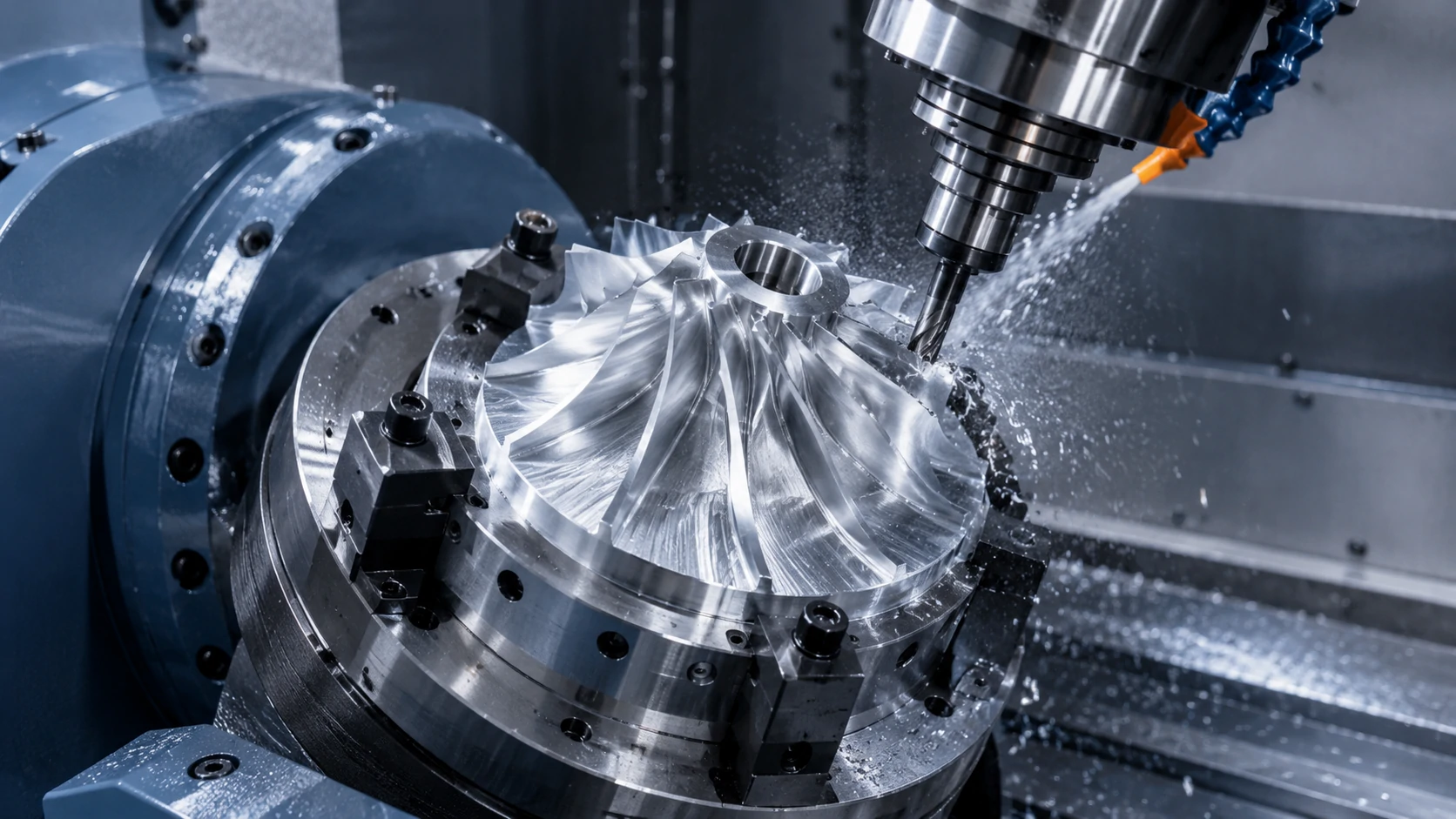
When high structural integrity, tight dimensional accuracy, and production-grade materials are required for custom parts, Computer Numerical Control (CNC) machining remains the undisputed industry standard. From single-unit functional prototypes to low-volume production runs, CNC technology bridges the gap between digital CAD design and physical performance.
At QY Prototypes, we operate state-of-the-art multi-axis CNC machining facilities engineered to deliver complex, high-tolerance components for aerospace, medical devices, automotive systems, and robotics. This comprehensive guide outlines technical capabilities, material selection criteria, and cost-optimization strategies for hardware procurement.
Choosing the Right CNC Machining Process
Understanding the ideal kinematic setup ensures optimal surface finish and lower unit manufacturing costs:
3-Axis & 4-Axis CNC Milling
Mechanism: The cutting tool moves along X, Y, and Z linear axes (with an added rotational A-axis in 4-axis machine setups).
Best Used For: Prismatic parts, flat profiles, slots, simple housings, and components requiring machining on 1 to 4 sides.
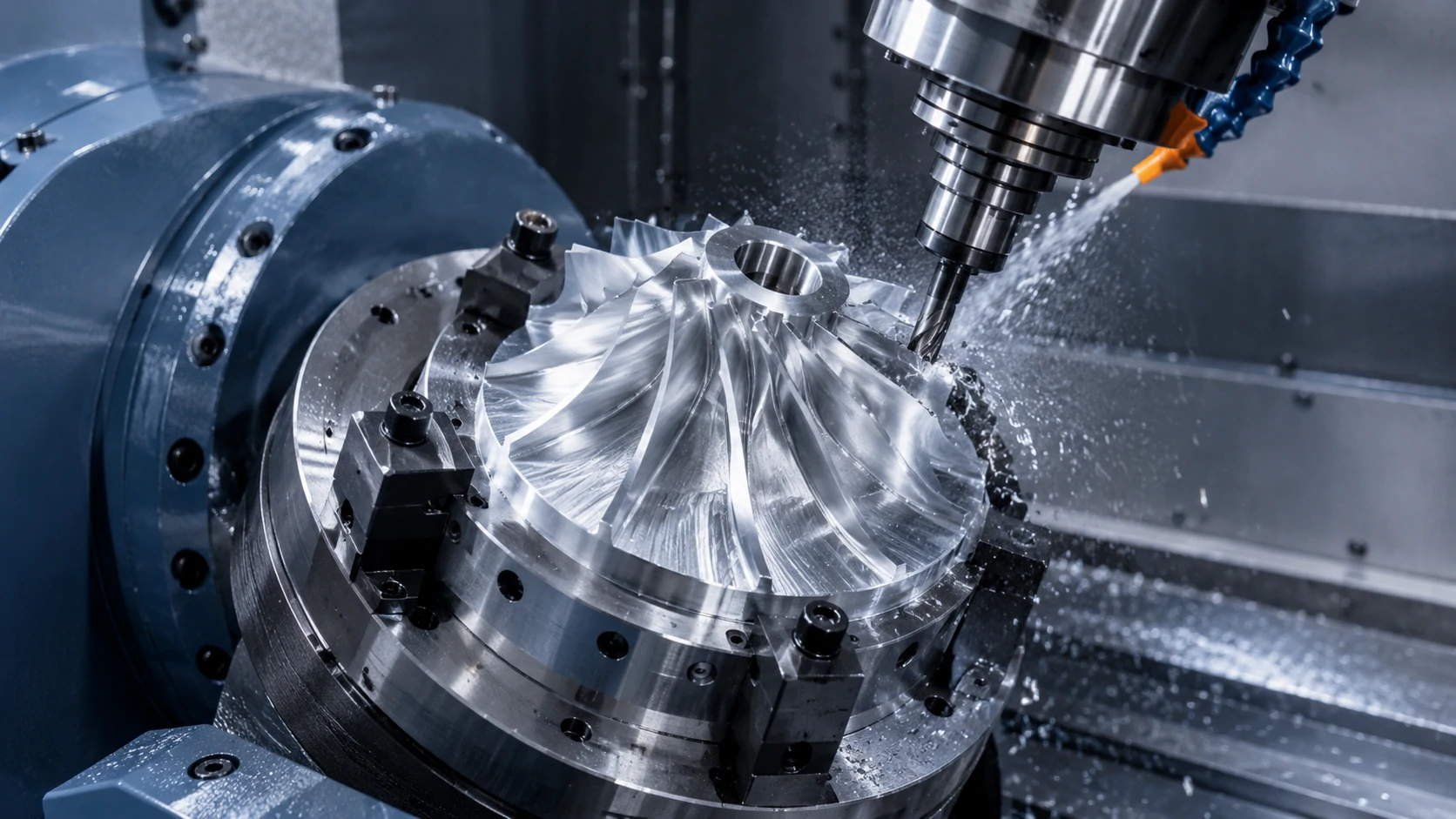
Simultaneous 5-Axis CNC Milling
Mechanism: The tool and workpiece move across 5 axes simultaneously (X, Y, Z, A, B/C).
Best Used For: Complex organic contours, deep cavities, impellers, medical implants, and aerospace structural parts.
Key Advantage: Eliminates multiple fixture setups, drastically improving geometric tolerance stack-up and reducing production lead time.
CNC Turning & Mill-Turn Integration
Mechanism: The workpiece rotates at high RPM while stationary cutting tools shape the material along cylindrical axes.
Best Used For: Rotational symmetry components, shafts, bushings, threaded couplings, and precision pins.
Material Selection Matrix for CNC Machining
Selecting the correct alloy or polymer dictates mechanical strength, thermal stability, and overall unit cost:
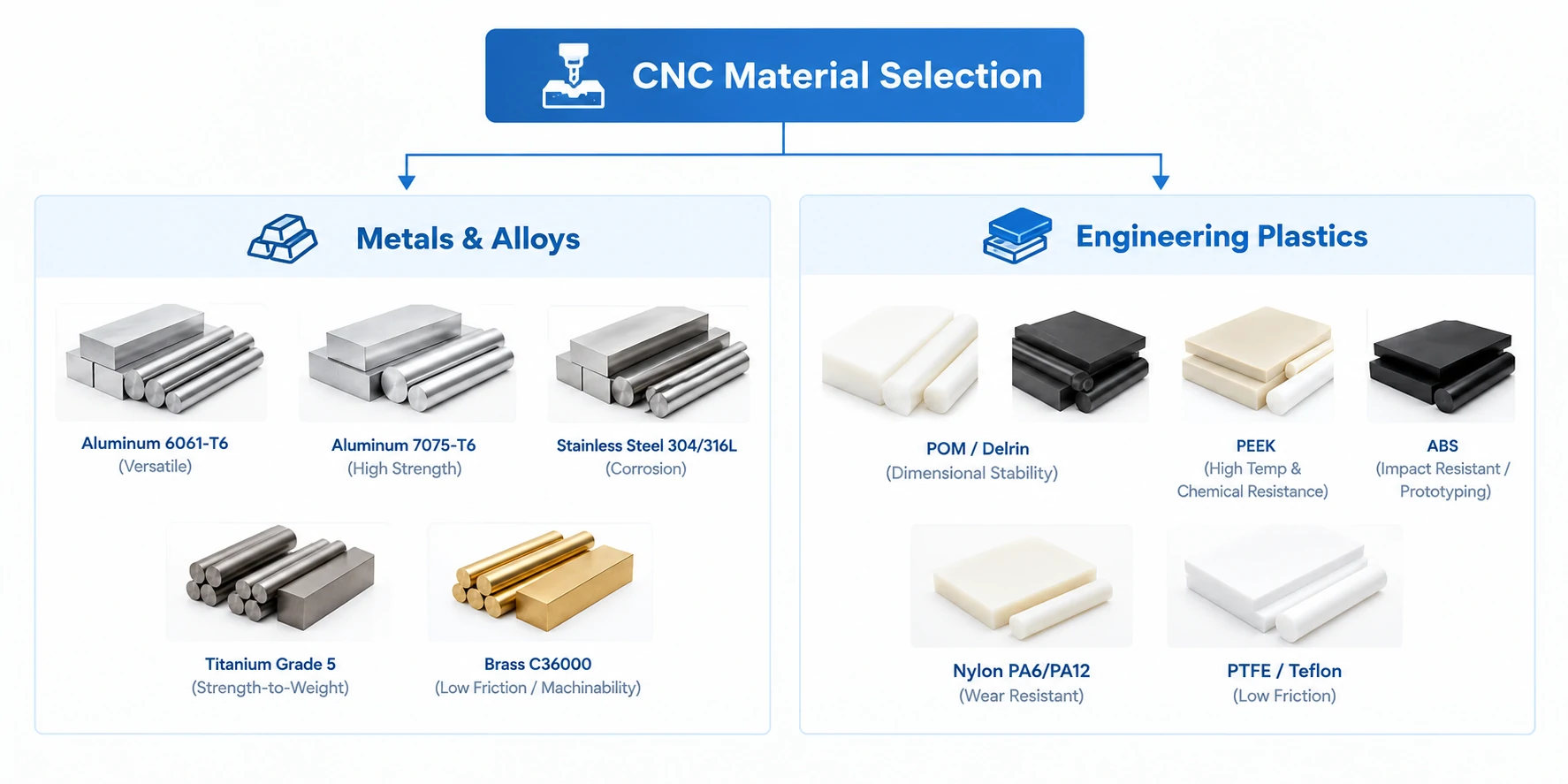
Aluminum 6061-T6: Excellent strength-to-weight ratio, high machinability, highly responsive to anodizing.
Stainless Steel 316L: Superior corrosion resistance, ideal for medical instruments and marine hardware.
Titanium (Ti-6Al-4V / Grade 5): High strength, light weight, and biocompatibility; widely used in aerospace and medical implants.
POM (Delrin): High stiffness, low friction, and exceptional dimensional stability for mechanical gears and bushings.
PEEK: Ultra-high performance plastic capable of continuously operating in high-temperature and harsh chemical environments.
Design for Manufacturability (DFM): How to Lower CNC Costs
Optimizing your CAD model during the early design stage prevents unnecessary machining hours and cutter wear. Follow these core DFM practices:
Increase Internal Vertical Radius: Avoid sharp internal corners in deep pockets. Design internal corner radii to be at least $1/3$ of the pocket depth to allow standard end mills to clear material efficiently.
Limit Deep Pockets: Machining cavities deeper than 4 times the tool diameter increases tool deflection, machining time, and risk of tool breakage.
Avoid Over-Specifying Tight Tolerances: Reserve $\pm 0.01 \text{ mm}$ tight tolerances only for critical interface dimensions (e.g., bearing fits or alignment dowel holes). Use standard ISO 2768-m tolerances for non-critical features.
Standardize Threaded Hole Depths: Limit thread depth to 2 to 3 times the thread diameter; deeper threads offer negligible structural strength gains while increasing tapping risk.
Secondary Finishing & Surface Treatments
To enhance corrosion resistance, surface hardness, or aesthetic appeal, QY Prototypes offers comprehensive post-processing surface treatments:
Anodizing (Type II & Type III Hardcoat): Provides corrosion resistance and wear protection; available in clear, black, red, blue, and custom color finishes.
Passivation & Electropolishing: Enhances stainless steel corrosion resistance and removes microscopic burrs.
Bead Blasting & Polishing: Delivers a uniform matte satin finish or mirror polish.
Plating & Powder Coating: Zinc, Nickel, and Chrome plating for electrical conductivity or heavy-duty environmental shielding.
Why Global Engineers Partner with QY Prototypes for CNC Services
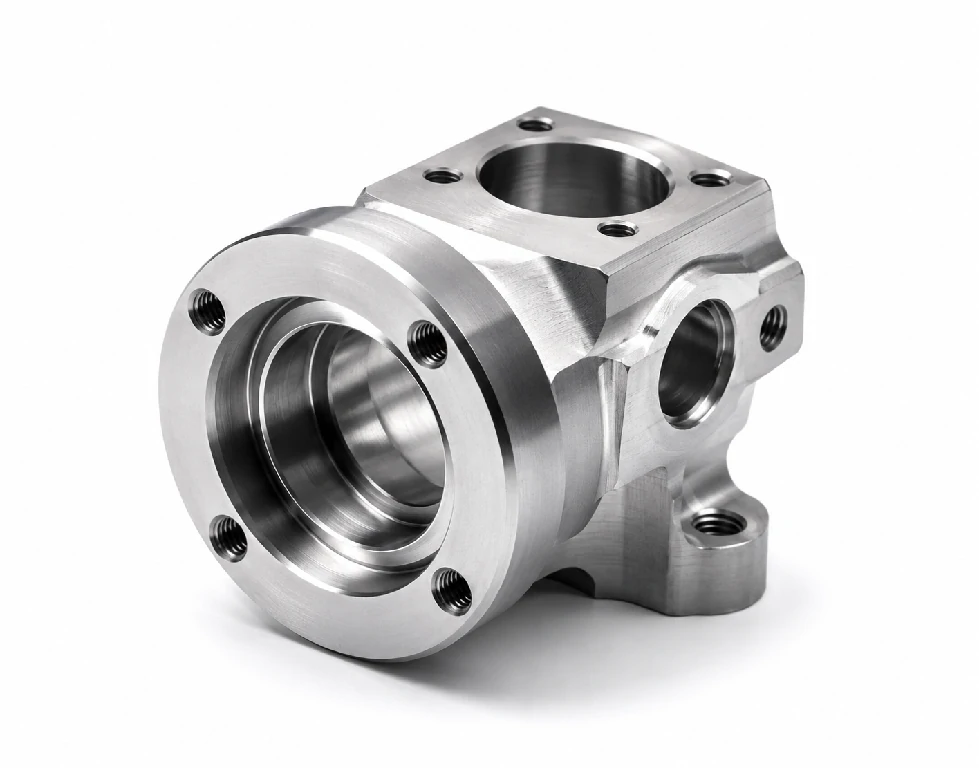
Integrated Quality Control: Certified ISO quality management systems backed by CMM (Coordinate Measuring Machine) dimensional reports, material spectrographic testing, and pin-gauge verification.
Rapid Turnaround & On-Time Delivery: Instant quotation review with automated DFM feedback within 24 hours.
Seamless Scalability: One-stop transition from 1-off functional CNC prototypes to low-volume production (50–500+ parts) and custom fixture assembly.
Frequently Asked Questions (FAQ)
Q1: What is the minimum order quantity (MOQ) for CNC machining at QY Prototypes?
We have no minimum order quantity (MOQ) requirement. We support single-unit functional prototyping ($1 \text{ part}$) up to low-volume batch production runs ($10,000+ \text{ parts}$).
Q2: How do I get an accurate CNC machining quote?
Simply upload your 3D CAD files (
.STEP,.STP, or.IGS) along with 2D technical drawings (
Q3: How does CNC machining compare to 3D printing in terms of cost and turnaround?
For low quantities ($1 - 5 \text{ parts}$) with complex geometries where strength is secondary, 3D printing may be faster and cheaper. However, for functional parts requiring end-use materials, structural rigidity, smooth surface finishes, and tight tolerances ($\pm 0.01 \text{ mm}$), CNC machining is superior in performance and unit cost for medium-to-high volumes.
Start Your Precision CNC Machining Project Today
Ready to turn your engineering designs into high-precision custom parts? Upload your CAD files to QY Prototypes for an instant quote, complimentary DFM review, and rapid delivery.