


- Room 202, Building 7, No. 125, Yongjun Road, Dalingshan Town, Dongguan City.

Position:
/
Custom Plastic Parts Manufacturers in China: The Ultimate Sourcing & Selection Guide
2026-10-27 17:39:13
Custom plastic components are integral to modern product development across medical devices, automotive systems, consumer electronics, and industrial automation. When sourcing from China custom plastic parts manufacturers, global engineering teams need to balance material specs, dimensional stability, surface finish, and unit cost across prototyping and production phases.
At QY Prototypes, we operate an integrated custom manufacturing facility in China, offering 3D printing, CNC machining, and rapid injection molding under one quality management system. This guide breaks down process selection, resin properties, and key criteria for evaluating plastic suppliers.
1. Comparing Custom Plastic Manufacturing Technologies
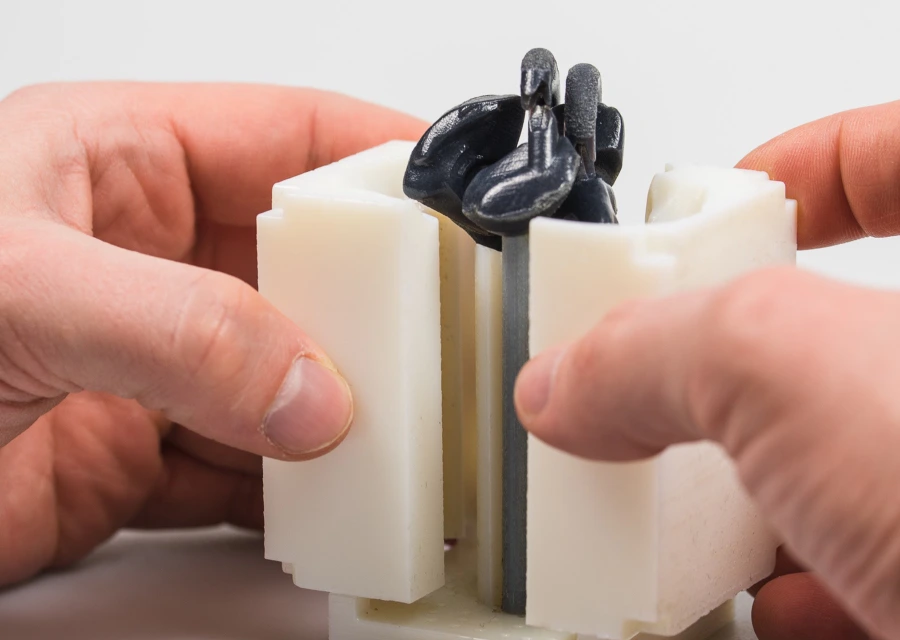
Selecting the correct fabrication route prevents unnecessary tooling expenses and delays. The comparison matrix below details the core plastic manufacturing methods offered by QY Prototypes:
Process | Best Application | Standard Tolerances | Production Volume | Available Materials |
Plastic 3D Printing (SLA/SLS) | Concept validation, organic geometries | ±0.1mm - ±0.2mm | 1 – 20 pcs | Photosensitive Resin, Nylon (PA12) |
Precision Plastic CNC Machining | Tight-tolerance functional parts, thick walls | ±0.05mm (Down to ±0.02mm) | 1 – 500 pcs | ABS, POM (Delrin), PEEK, PC, Nylon, PTFE |
Rapid Plastic Injection Molding | Low-to-medium volume end-use production | ±0.05 mm | 100 – 10,000+ pcs | Production-grade ABS, PC, PP, PA66, TPE, Silicone |
2. Plastic Material Selection Matrix for Engineering Components
Different thermoplastics exhibit vastly different behaviors during machining and molding (such as thermal expansion and stress distortion). Choosing the right resin is crucial for performance:

ABS (Acrylonitrile Butadiene Styrene): Cost-effective, easy to machine and polish, ideal for structural enclosures and display prototypes.
POM / Delrin (Polyoxymethylene): Outstanding dimensional stability, low coefficient of friction, and high rigidity; perfect for gears, bearings, and sliding mechanisms.
PEEK (Polyether Ether Ketone): Ultra-high performance polymer capable of resisting temperatures up to $260^\circ\text{C}$ and harsh chemicals; ideal for aerospace and medical implants.
Polycarbonate (PC) & PMMA (Acrylic): High clarity and impact resistance for optical lenses, light pipes, and transparent housings.
3. Design for Manufacturability (DFM) Tips for Custom Plastic Parts
To minimize unit cost and prevent part deformation during custom manufacturing:
Maintain Uniform Wall Thickness: In plastic injection molding and 3D printing, uneven wall thickness leads to internal voids, sink marks, and warpage. Maintain wall uniformity within 1.5mm to 3.0mm.
Account for Plastic Thermal Expansion during CNC Machining: Plastics expand under cutting heat faster than metals. Use sharp carbide tooling and continuous coolant airflow to maintain ±0.05mm tolerances.
Incorporate Internal Corner Radii: Avoid sharp internal corners in CAD models; adding a generous radius (R ≥ 1.0mm) reduces stress concentration and machining chatter.
4. Why Partner with QY Prototypes for Custom Plastic Parts in China
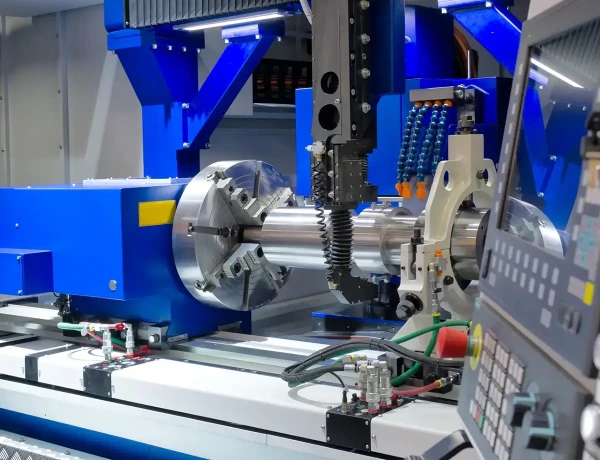
As a leading custom parts supplier, QY Prototypes bridges the gap between early-stage prototyping and full-scale manufacturing:
End-to-End Plastic Solutions: Transition smoothly from a single 3D printed concept model to CNC-machined functional prototypes, rapid tooling, and high-volume injection molding.
Strict Quality Assurance: Every batch undergoes dimensional inspection using CMM, optical projectors, and surface roughness meters to guarantee compliance with CAD specifications.
Rapid Quotation & Global Shipping: Receive an itemized DFM review and competitive quote within 24 hours, backed by express international shipping via DHL, FedEx, and UPS.
5. Frequently Asked Questions (FAQ)
Which manufacturing process is best for custom plastic prototype parts?
For 1-10 visual models, SLA/SLS 3D printing is fastest and most cost-effective. For functional prototypes requiring tight tolerances (+/- 0.05 mm) and high mechanical strength, precision CNC machining in Delrin, PEEK, or ABS is ideal. For quantities over 100 parts, rapid injection molding provides the lowest unit cost.
How do I select between CNC machining and 3D printing for plastic parts?
Choose 3D printing for early-stage visual models, low budgets, or highly complex organic geometries that cutters cannot reach. Choose CNC machining when your application demands real production thermoplastics (like Delrin or PEEK), tight engineering tolerances (±0.05mm), or smooth mechanical surface finishes.
What is the lead time for custom plastic parts from QY Prototypes?
For rapid 3D printing and CNC machining, standard lead times are 3 to 5 business days. For rapid injection molding, tooling and first article samples typically take 10 to 15 business days.
Does QY Prototypes sign Non-Disclosure Agreements (NDAs)?
Yes. We strictly respect client intellectual property. We sign standard NDAs prior to reviewing any CAD files or manufacturing specifications.
What engineering plastics can QY Prototypes machine and mold?
QY Prototypes processes a broad range of engineering polymers including ABS, POM (Delrin), PEEK, Polycarbonate (PC), Nylon (PA6/PA12), PTFE (Teflon), PMMA (Acrylic), Polypropylene (PP), and liquid silicone rubber (LSR).
Get a Quote for Custom Plastic Parts Today
Looking for a reliable Chinese manufacturer for your custom plastic parts?
Upload your 3D CAD files (.STEP/.IGS) to QY Prototypes today for a fast, comprehensive DFM analysis and competitive quote.